The Ver in the 2026 drought
How is our favourite chalk stream coping with the long hot summer that now has been officially declared a drought? The answer is ‘not very well’.
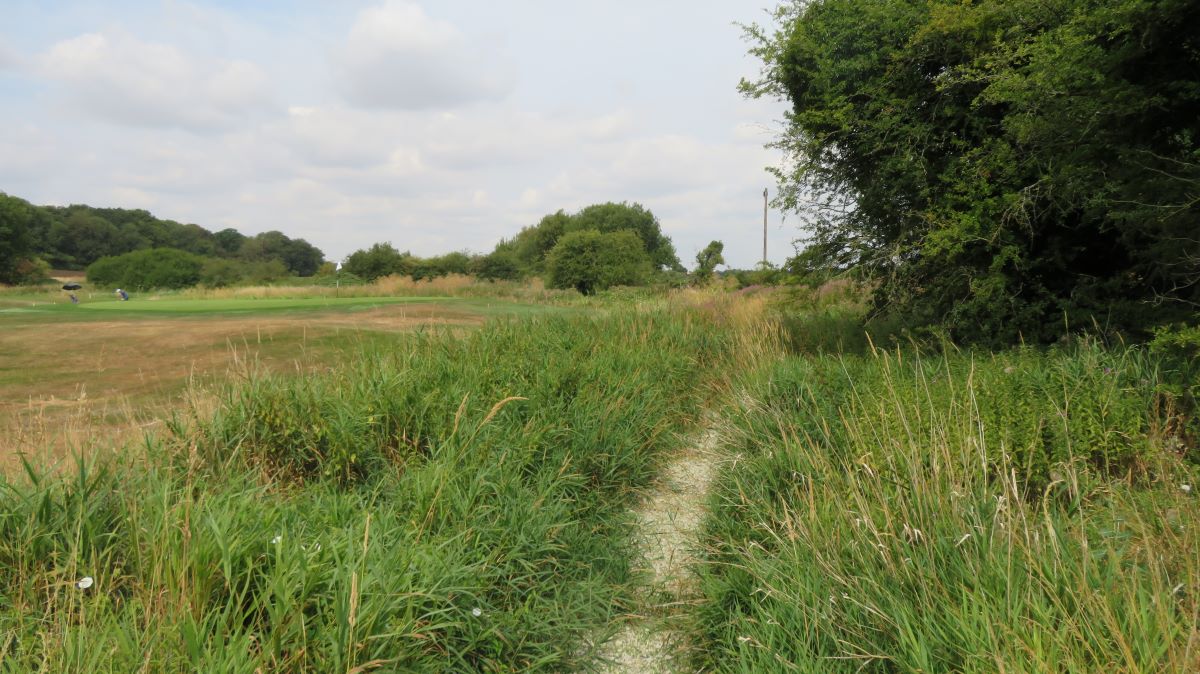
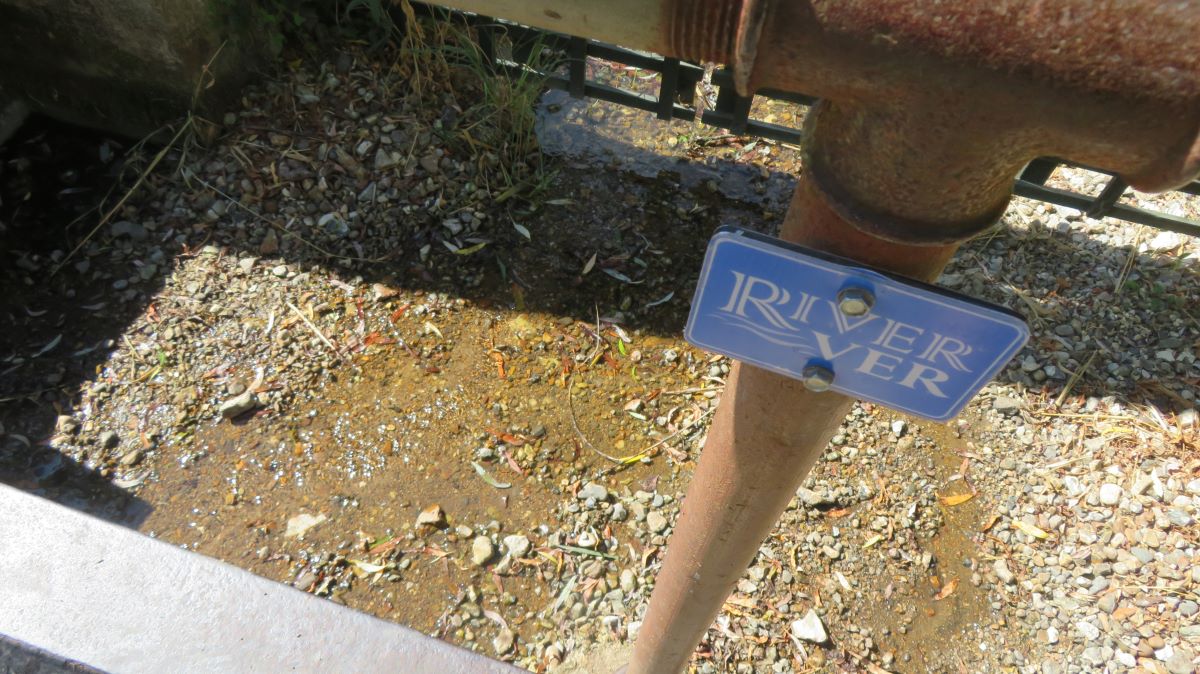
Our volunteers are recording low flows and the Ver is dry from the east of Redbourn up to Kensworth (aside of some pooling around Markyate sewage works). This section is dubbed a ‘winterbourne’ but it rarely dries up as early as July. Even at the lower end of our 17-mile river, our members have been wading in very shallow water since early July.
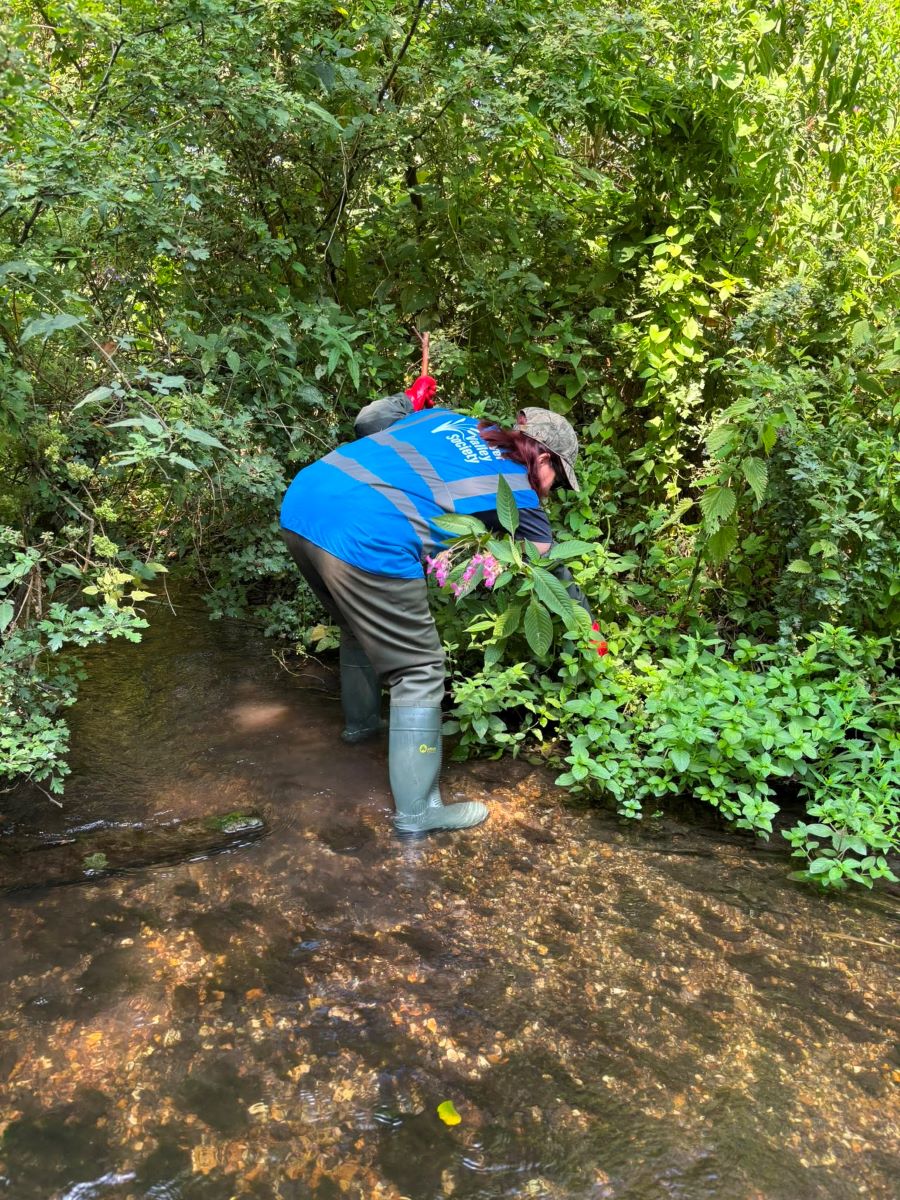
Chalk streams are famous for their cool clear water at a steady 10-12°C supplied from the natural underground aquifer. In the Ver’s case, we have already seen water temperature exceed 26°C at Sopwell and high water temperatures in other areas up and down the valley. That’s bad news for many of the river’s creatures, especially Brown Trout. The trout experience significant stress in temperatures above 20°C, and are unlikely to survive long in temperatures over 25°C, particularly as hot weather reduces dissolved oxygen levels. Brown Trout are slow growing and can live for over 20 years. Losing the larger best-breeding fish can have a significant effect on the river’s ecological health.
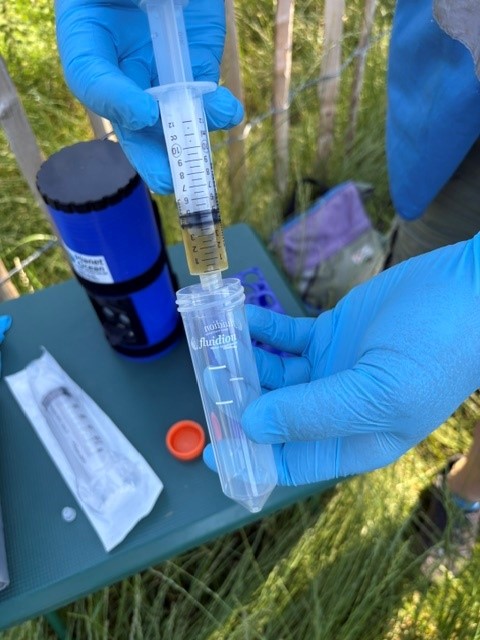
Water quality is falling too. This year the Society has invested in E. coli monitoring equipment and with the climbing temperatures, the level of E. coli in the river has risen significantly, to well above those deemed ‘sufficient’ for bathing at designated inland bathing spots. See here for the full story: https://www.riverver.co.uk/e-coli-monitoring/
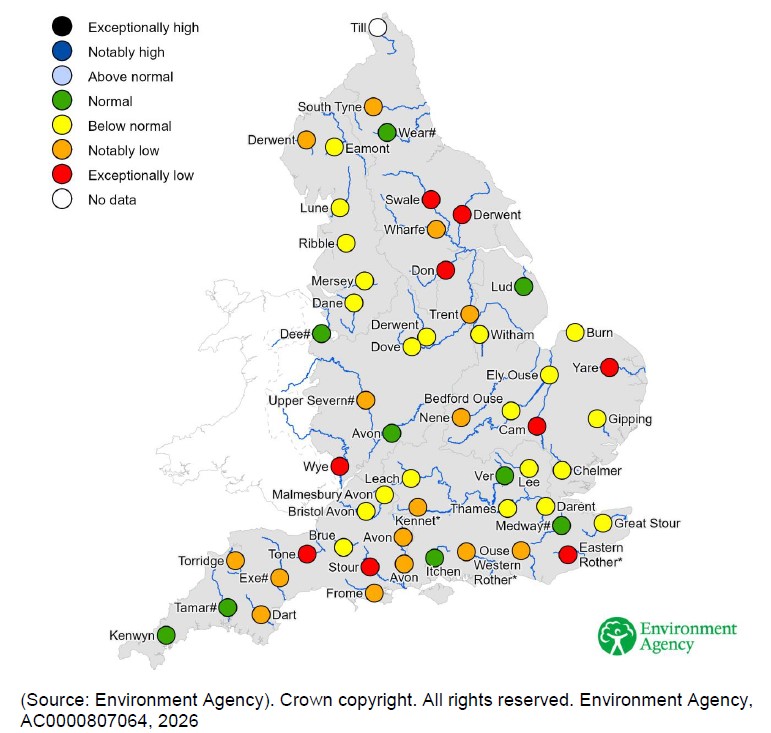
Certainly, the official classification of the Ver’s flow does the river no favours. As recently as last week (21 July), it was still ‘Normal’ [and remains ‘Normal’ w/e 28 July!] according to the EA’s weekly report and yet it’s unquestionably low, warm and a third of it is missing! [Most probably the averages include the worst years of permitted abstraction and give a slightly distorted view of ‘Normal’.]
What’s equally alarming is that in most years a drought wouldn’t normally have been called as yet. On 29th July 2026 the indicator borehole at Lilley Bottom was at 95.4mAOD but usually a hosepipe ban (aka TUBs) wouldn’t be employed until groundwater fell to 92.5mAOD.
Groundwater levels that determine, first ‘Environmental Stress’, and then ‘Drought Zone 1’ and ‘Drought Zone 2’ (when a TUBs may be introduced), are still 1 metre above ‘Environmental Stress’ and 3 metres higher that for DZ2. It seems that the main driver of the ban is the additional customer demand (up 20% according to Affinity Water) putting strain on the supply network, rather than any initial concern to save the environment.
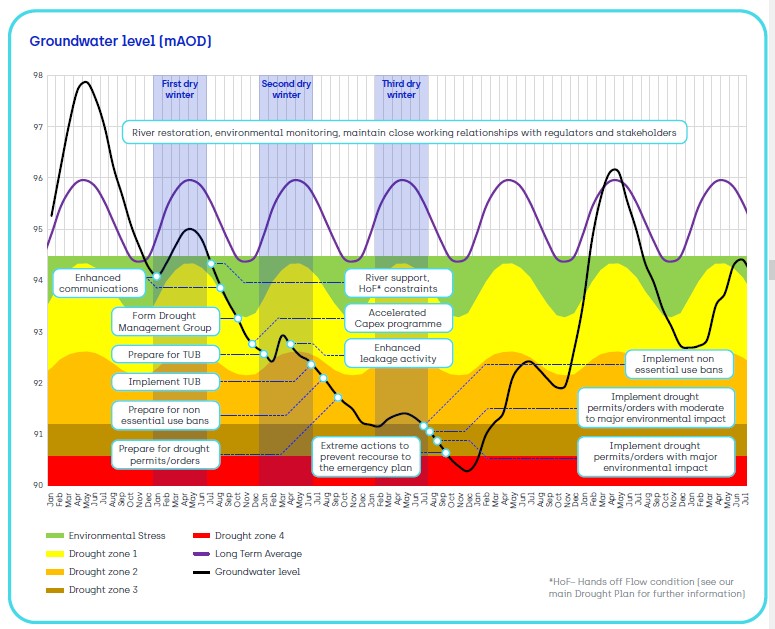
This just demonstrates, (to those with long memories, remember the Ver drying up in 2019?) that it’s perfectly possible for the Ver to dry up again before even a hosepipe ban is called for environmental reasons. We continue to ask for the triggers to be moved to better protect the environment.